Developers · main contractors · groundworkers
Surplus out. Fill in. Filed as it goes.
List what you are digging out, take a match from a site nearby, and agree the terms between you. From there the registration, the standstill, the dockets and the invoice build themselves as the material moves.
Surplus out
Matched, not tipped
The batch goes to a site that wants it, chosen from counterparts within 50 km on the same EWC code. Moved as an Article 27 by-product it carries no €10-per-tonne recovery levy, but the work the exchange saves you is finding the site.
Fill in
With its papers
Fill that arrives with its provenance: the registration reference, the conformity statement, and a signed chain of custody for every load that came through the gate.
Which is the difference between material you can stand over and material you are taking somebody’s word for.
One batch, top to bottom
The whole movement reads like a core sample: each step a layer, each layer deeper in the record.
List the batch
Greenfield soil and stone, tonnage, location, planning reference. Two minutes, and it is on the market.
Review matches
Counterparts within 50 km on the same EWC code whose window overlaps yours, ranked by distance and volume fit. Or browse every open listing yourself.
Agree the deal
Propose, counter, accept. Commercial terms are yours and the platform takes no position in them; it records what you agreed and binds the two sites to it.
Register, and wait out the standstill
The registration is assembled from what you already entered, the Statement of Conformity and End User Declaration are generated, and the five working days are counted against the Irish calendar. You certify; the platform counts.
Move it, ticketed
Permitted hauliers only. Every load carries a GPS-stamped e-ticket, a pickup photograph, the tonnage and a signature on the glass, hash-chained and producible at the roadside.
Settle
Delivered tonnages become the self-billed VAT invoice under s.71: the buyer draws it up, the supplier accepts it, and that acceptance is the issue date. Nobody re-keys a docket.
The site manager’s screen
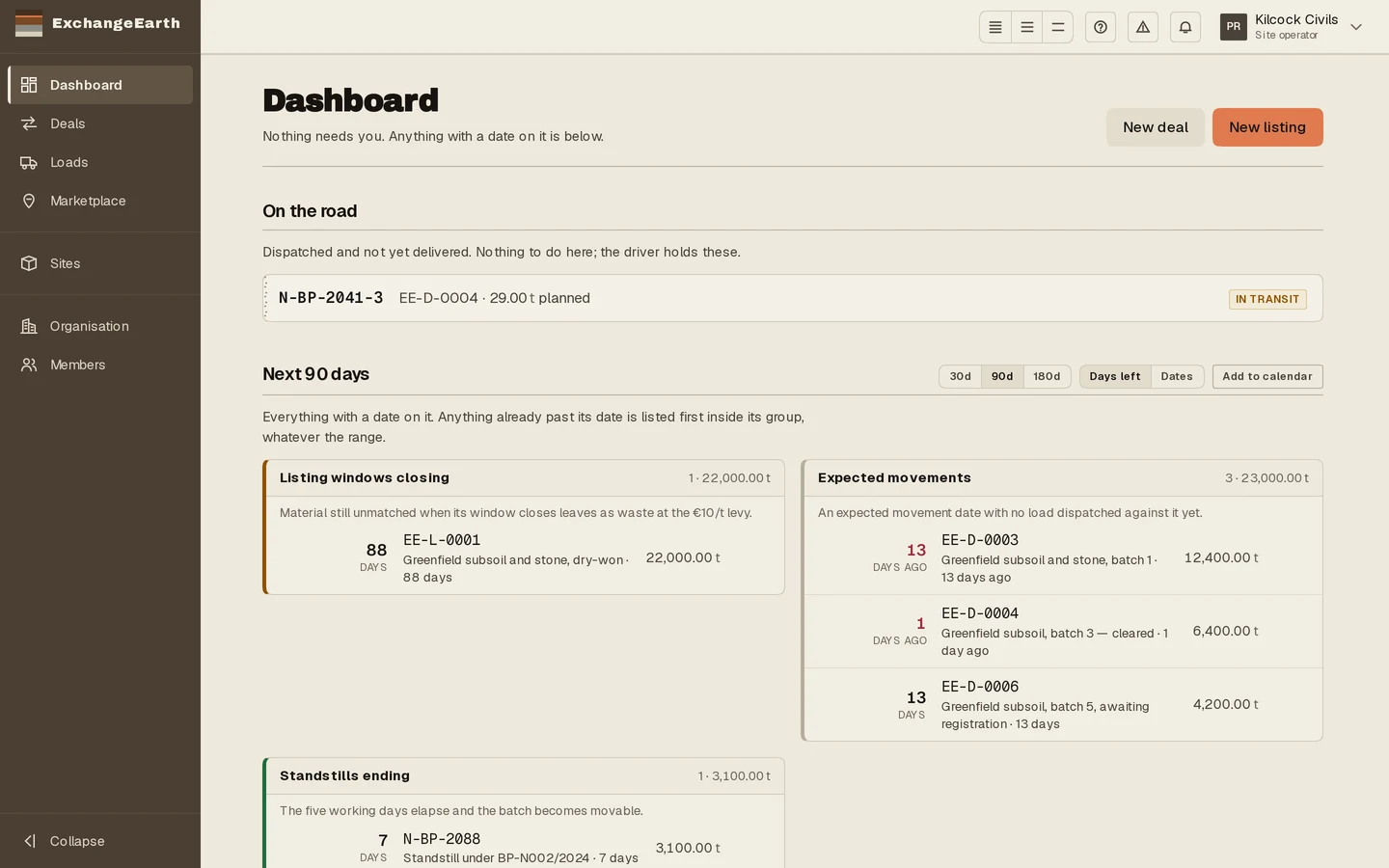
Can it go today?
Everything with a date on it, in one place: standstills about to elapse, listing windows about to close, expected movements with nothing dispatched against them, and the loads already on the road. Anything past its date is listed first inside its group.
Nothing here needs chasing by email. If the dashboard is empty, nothing needs you.
What goes away
Ringing round for a home for it
The counterparties are listed, with their tonnage, their window and how far away they are. You start the conversation from a screen, not a contact book.
EDEN form wrangling
The registration is assembled from data you already entered (batch, sites, planning references), not retyped into a portal.
Paper dockets
Every movement is an e-ticket with GPS, photo, tonnage and signature. Nothing to lose in a cab or a site office.
Assembling an audit file
Every load's events are hash-chained and every document versioned. When the EPA or an auditor asks, the file already exists.
Owners & admins
Set up sites, agree deals, hold the compliance record. The name on the registration sees everything that touches it.
Site managers
One glance answers “can it go today?”: the standstill state, the cleared loads, the haulier assigned.
Drivers & receivers
A phone flow built for the gate: accept, photograph, sign. They create the evidence without knowing they are.
Launching soon. Set up your account now.
Create your organisation and invite your team today. Accounts activate by email the day the platform opens.