Under self-billing the buyer draws up your invoice and is its issuer; it becomes legally issued when you accept it. Your move is the acceptance: express, by payment, or by letting the fourteen-day window run.
1
Accept the self-billing agreement first
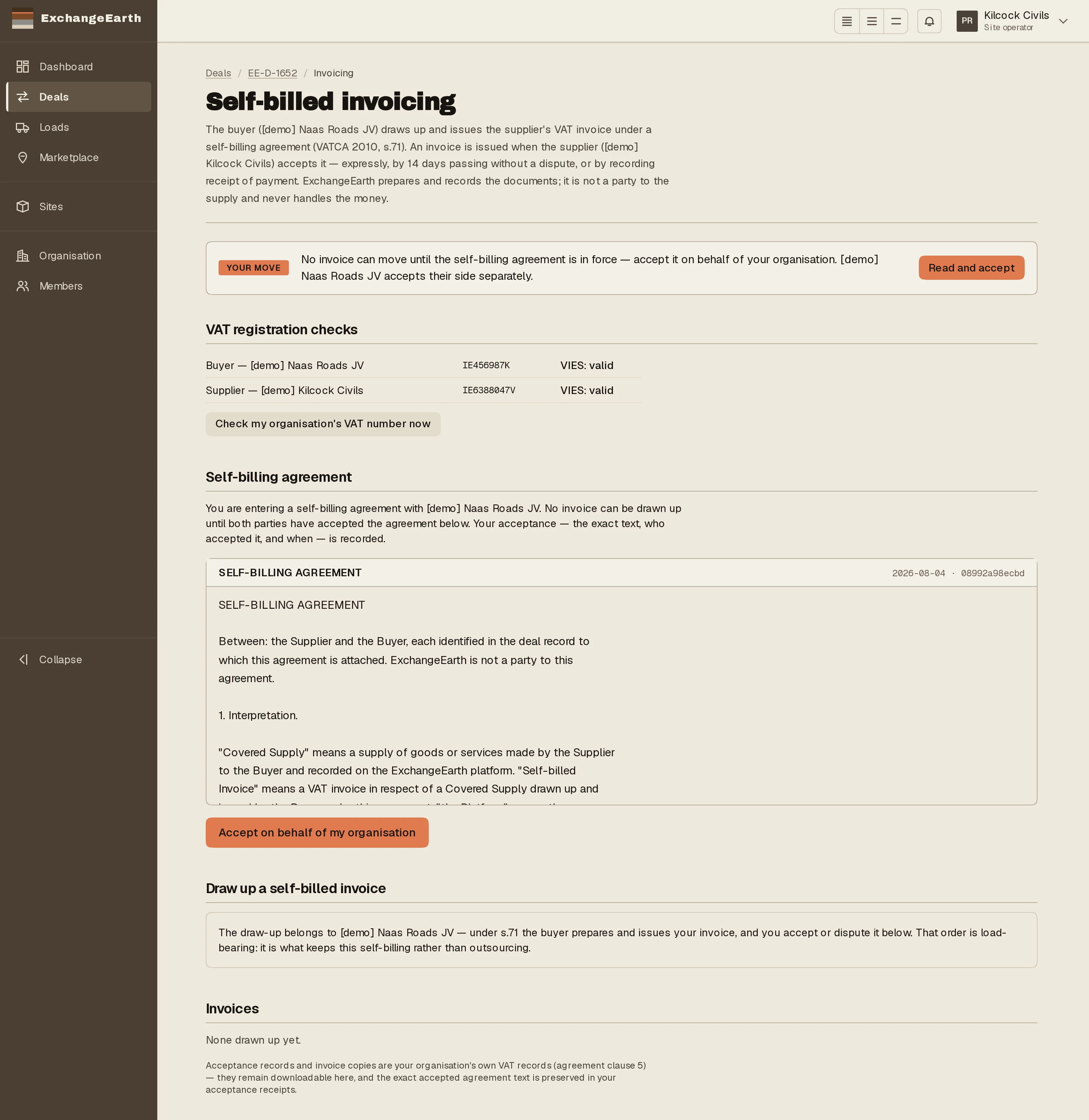
Before anything can be drawn up, both sides accept the agreement: Accept on behalf of my organisation. It covers the arrangement the statute requires: the buyer prepares and issues your invoices, and you agree the acceptance procedure below.
The supplier's view of the invoicing surface before the agreement is in place.
2
Read the drawn-up invoice
When the buyer draws one up, it lands here carrying the Self-billing endorsement the regulations require. Check the supply date, the net, the VAT treatment and the description against the deal.
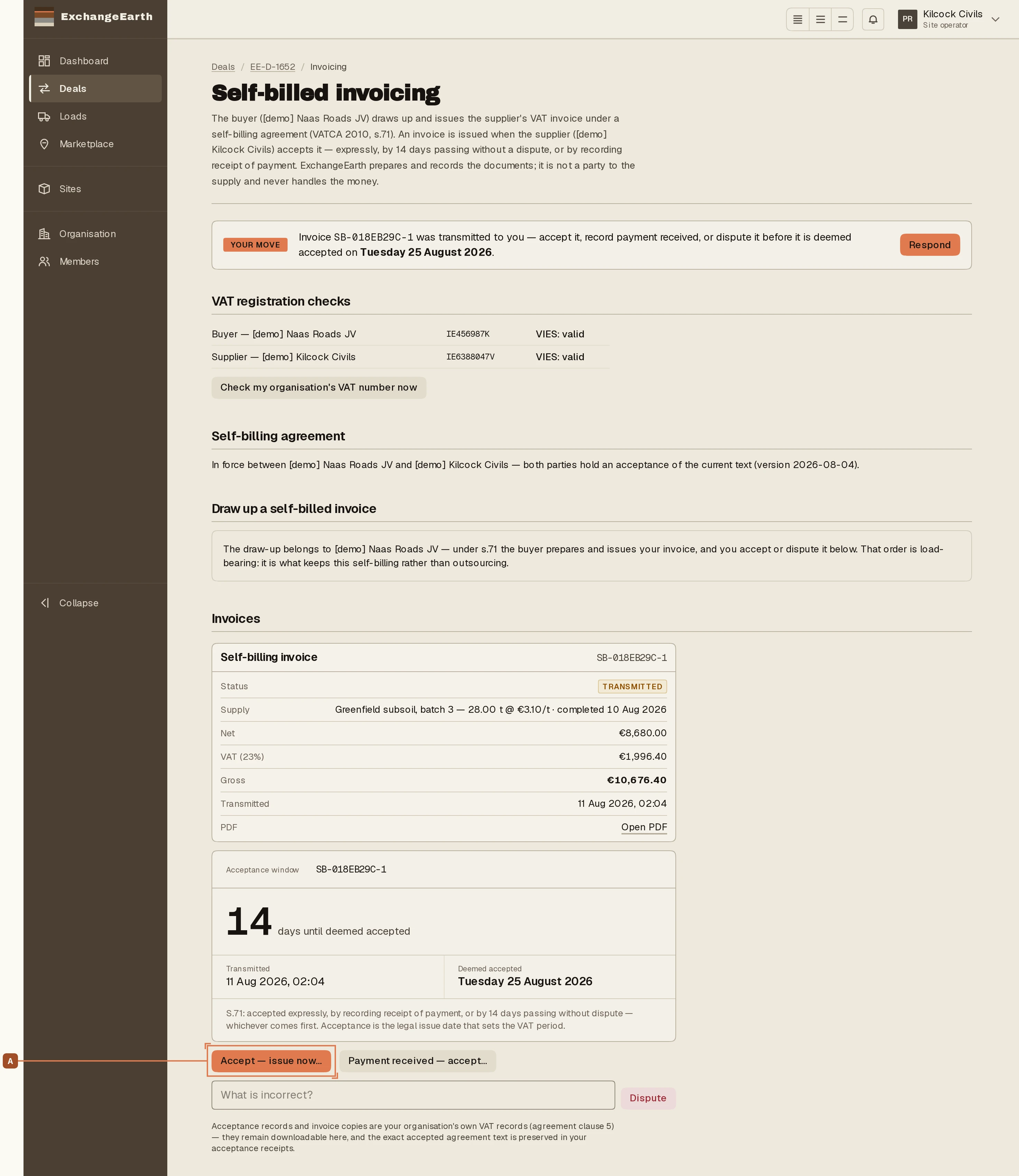
An invoice awaiting your response, with the deemed-acceptance countdown running.
3
Accept, dispute, or let silence accept
Accept and issue now makes it issued today; Payment received, accept records acceptance by payment. Dispute it and the buyer must draw up a corrected invoice within five working days, which supersedes this one. Do nothing and it is deemed accepted when the fourteen days run out; the countdown on the card is that window.
4
Know what the acceptance date means
The invoice is issued when you accept it, not when the buyer generated it. That acceptance timestamp is the issue date that drives VAT periods, which is why the app records it to the second.
Put a batch on the marketplace: site, EWC code, tonnes and window. Matching starts reading it the moment you publish, and the same form, flipped, posts a material-needed listing.
Browse the open market or your matches, and convert a listing into a deal with one counterpart. Converting is permanent: the listing leaves the market.
From draft to agreed: propose to the counterparty, invite them to register if they are not here yet, and read the turn banner that says whose move it is.
Eligibility, the signed End User Declaration, registration on EDEN, the five-working-day standstill and the Statement of Conformity, in the order the criteria require.
If the batch fails a national criterion, the fallback is a single-case Article 27 notification on EDEN: record the submission, wait for the EPA's determination, record the outcome.